Short answer: a signal booster and a carrier network extender (also called a femtocell) both fix weak indoor cell signal, but they work in opposite directions. A signal booster catches the cell signal that’s already arriving at your property from the outside and amplifies it indoors; it needs some usable outdoor signal to grab onto, and it can’t create signal that isn’t there. A network extender skips the outdoor signal entirely: it builds its own small cell inside your home, using your existing home internet connection to link back to your carrier’s network. Buy the wrong one and you solve nothing. A booster in a true dead zone has nothing to amplify, and an extender on unreliable home internet has no path to the network at all.
Same Complaint, Two Completely Different Devices
If your carrier offered you a “free extender,” or you saw the word “femtocell” somewhere while researching a dead zone, it’s easy to assume it’s just another version of the signal booster you’d already been looking at. It isn’t. They get lumped together because they show up in the same search results and solve the same symptom, weak bars indoors, but the way each one actually reaches your carrier’s network is fundamentally different.
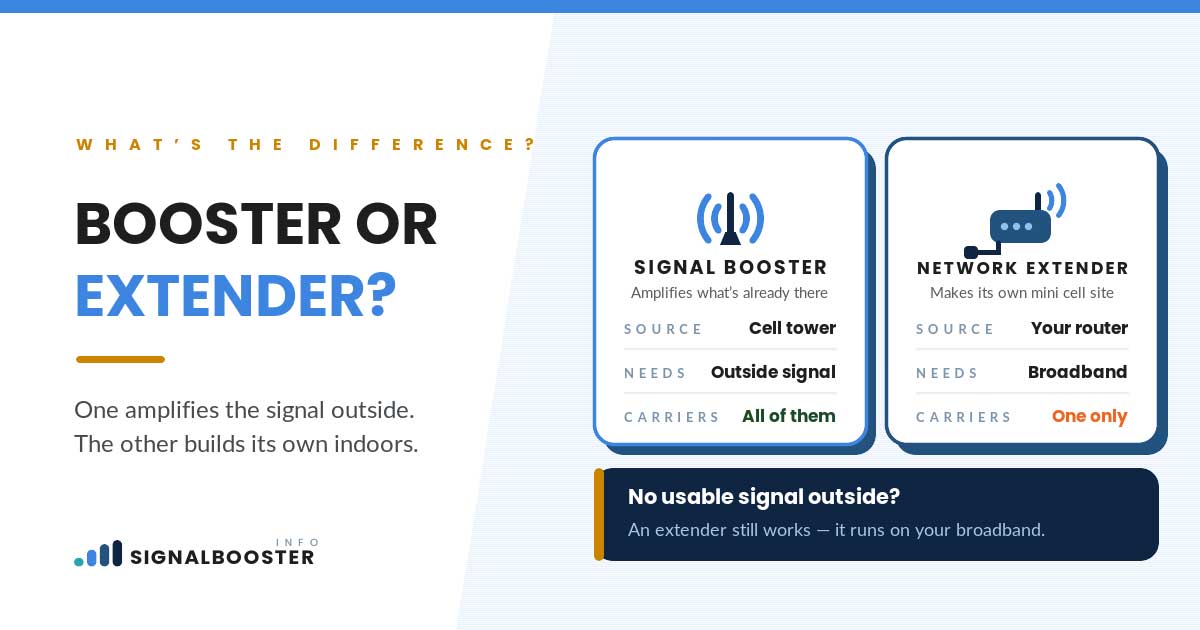
A signal booster is an amplifier. It takes an over-the-air cell signal that already exists at your address and makes it stronger indoors. A network extender is a small cellular base station of its own. It doesn’t amplify anything from outside; it creates a brand-new, tiny coverage area inside your home and connects that coverage area to your carrier through your internet, not through a tower.
That one distinction, amplifying an existing signal versus building a new one over the internet, decides which device actually fixes your problem. Everything else in this article follows from it.
How a Signal Booster Works: It Amplifies What’s Already There
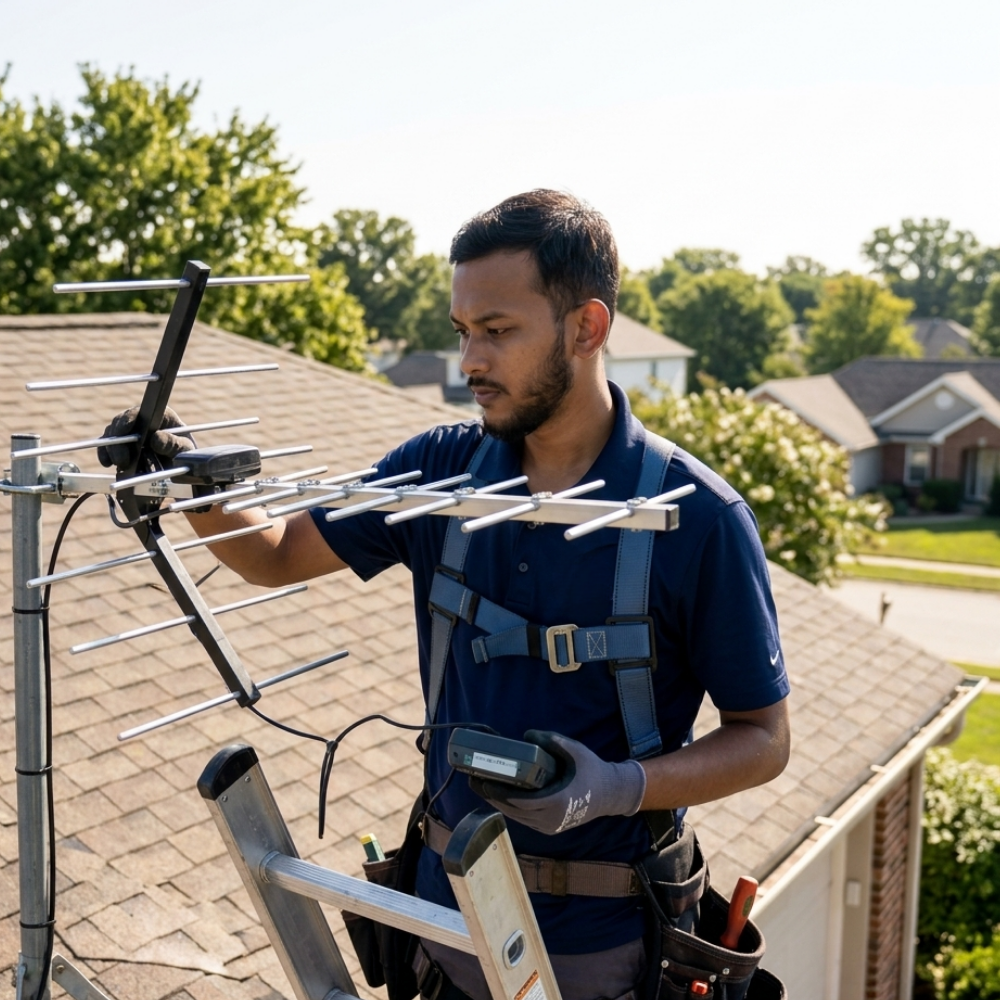
A signal booster has three parts working together: an outdoor antenna that catches whatever cell signal is reaching your property, an amplifier that boosts that signal, and an indoor antenna that rebroadcasts the stronger signal inside your walls. The whole system depends on one condition being true before anything else matters: there has to be a real, usable signal outside for the outdoor antenna to catch in the first place.
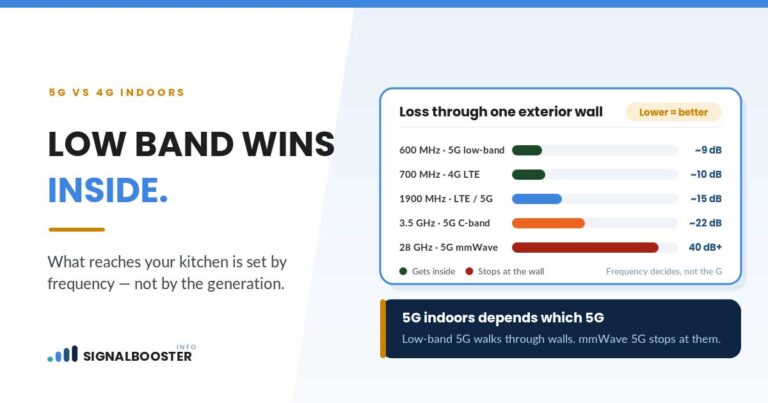
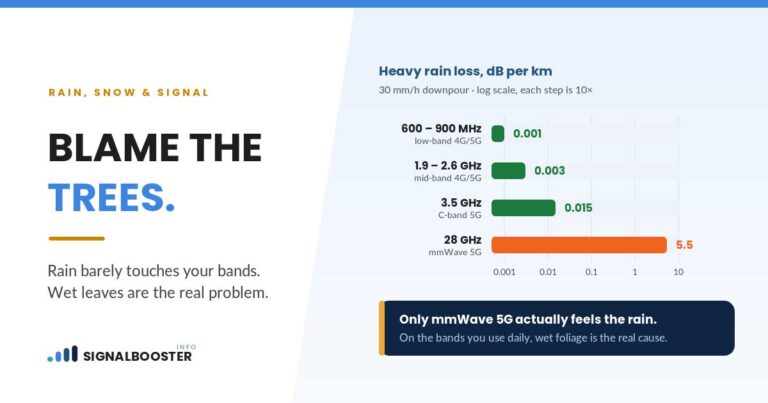
This is why a booster is the right tool for a very specific kind of problem: signal that exists but gets lost between the outdoors and your living room. Distance from a tower, exterior walls, low-E glass, metal roofing, hills, and tree cover all weaken a signal on its way in. A booster’s entire job is fighting that loss. It works across whichever carriers are transmitting a signal it can catch, which is part of why it behaves differently from a device tied to one carrier (see does a signal booster work with all carriers for how that plays out in a multi-carrier household). For the mechanics of how the antenna-amplifier-antenna chain fits together, see what a signal booster actually is.
What a booster cannot do is the flip side of what it does well: it cannot manufacture a signal that was never there outdoors to begin with. No amplifier setting and no antenna placement changes that.
How a Network Extender Works: It Builds Its Own Small Cell Over Your Internet
A network extender starts from a different premise entirely. Instead of reaching outside for a signal to strengthen, it connects to your home internet router and uses that internet connection as its link back to the carrier’s core network. From there, it broadcasts its own small cellular signal inside your home, one your phone connects to the same way it would connect to a distant tower, except the “tower” is sitting on a shelf in your house and the backhaul is your broadband, not radio waves from miles away.
This is the part that makes network extenders genuinely useful in situations where a booster is powerless: a location with no outdoor cell signal at all. Since the device isn’t waiting on anything to arrive over the air, there’s nothing outdoors it needs to catch. What it needs instead is a working, stable home internet connection, because that connection is doing the entire job an outdoor antenna would otherwise do.
The tradeoff sits right there in the mechanism. A network extender is issued for a specific carrier’s network, so it works for phones on that one carrier, not across carriers the way a booster’s amplified signal can. And because it depends entirely on your internet rather than on radio propagation, its reliability is only as good as your broadband, not as good as the local cell tower.
The One Question That Tells You Which One You Need
Almost every reader who confuses these two devices can sort themselves into the right category by answering a single question: can you get any usable cell signal at all standing outside your home?
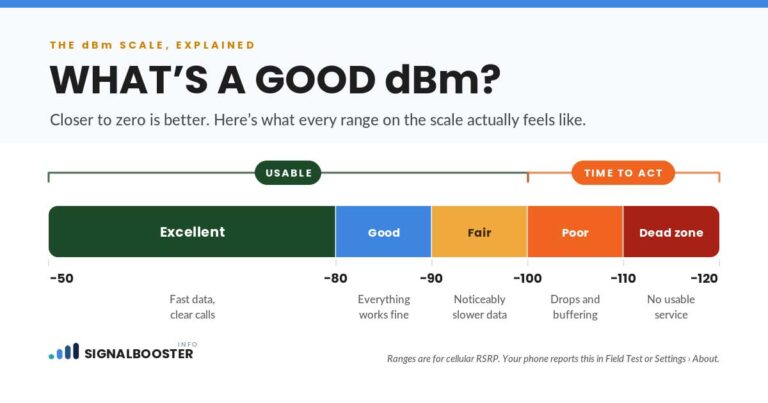
If the answer is yes, even a weak one, a signal booster is built for exactly that situation. It has something outdoors to catch and strengthen. Check the real number rather than guessing from bars on your phone. See how to check your actual dBm signal strength for the difference between a “one bar” reading that’s actually workable and one that isn’t.
If the answer is no, nothing outdoors, not near a window, not standing in the yard, a booster has nothing to amplify and won’t help. That’s the situation a network extender is built for, provided your home internet connection is solid. Before assuming your address is a true zero-signal dead zone, it’s worth ruling out the more common causes of “weak signal at home” that a booster does fix; see why your signal is weak at home in the first place for the usual culprits.
What Happens When There’s No Outdoor Signal to Amplify
This is the scenario where buying a booster wastes money. If your outdoor signal reading is effectively zero, a booster’s outdoor antenna has nothing to catch, so its amplifier has nothing to strengthen, so its indoor antenna has nothing to rebroadcast. The device isn’t defective in this situation; it’s simply the wrong tool. Amplifying zero is still zero.
This is also the scenario a network extender is designed to handle, because it never depends on an outdoor signal in the first place. It builds its own indoor cell from your internet connection instead of from the air, so a true outdoor dead zone doesn’t disqualify it the way it disqualifies a booster. If you’ve confirmed a genuine zero-signal reading outdoors, this is the branch of the decision that applies to you, not the booster branch.
What Happens When Your Home Internet Goes Down
The network extender’s strength is also its single point of failure. Because its entire connection back to the carrier’s network runs over your home internet, an internet outage takes the extender down with it, even if the device itself is powered on and working correctly. A weak, unstable, or intermittent broadband connection can produce the same result: a shaky link to the carrier that drops calls or fails to hold a connection, not because of anything happening with the cellular network at all.
A signal booster doesn’t have this failure mode, because it was never depending on your internet to begin with; it depends on the outdoor cell signal instead. That’s the direct tradeoff between the two devices: a booster fails when there’s no outdoor signal, and a network extender fails when there’s no reliable home internet. Neither one is more “reliable” in the abstract. Each one is only as reliable as the specific input it depends on.
Why the Two Are Regulated Differently
The two device categories are treated differently by design, because they connect to the network in different ways. A signal booster is consumer equipment that amplifies an over-the-air signal, so it falls under FCC certification requirements and, in practice, a registration step with the carriers whose signal it amplifies. A network extender is different: it’s equipment the carrier itself issues and connects directly to its own core network through your internet, so the carrier that provides it governs how it’s set up and used on its network.
The specifics of certification and registration steps are genuinely important to get right and change over time, so rather than guess at them here, that ground is covered on this site’s own page: see is a signal booster legal for what applies to boosters. If you’re considering a network extender, the equivalent questions, whether one is currently offered, on what terms, and what setup it requires, are ones only your own carrier can answer accurately for your account and your area. Ask them directly before assuming anything based on what another household has.
The Comparison, Side by Side
Both devices answer “my indoor signal is weak,” but they start from opposite ends of the problem. This table compares them on how each one actually works and what each one requires, not on price or brand.
| Signal Booster | Network Extender (Femtocell) | |
|---|---|---|
| What it starts with | An existing outdoor cell signal, even a weak one | No outdoor signal required |
| What it needs to function | A usable outdoor signal to catch and amplify | A working, stable home internet connection |
| Where its signal actually comes from | The nearest cell tower, over the air | Your home internet, routed to the carrier’s core network |
| Carrier compatibility | Amplifies signal from whichever carriers are present, see does a signal booster work with all carriers | Issued for one specific carrier’s network |
| What stops it from working | Zero usable outdoor signal | An internet outage, or broadband too unstable to hold the connection |
| A free indoor-only alternative worth ruling out first | Not applicable, a booster requires purchase | Wi-Fi calling covers some of the same ground for calls and texts on your own Wi-Fi network, at no cost |
| How it’s regulated | FCC-certified equipment; see is a signal booster legal | Provisioned directly by the carrier that issues it; ask your carrier for current terms |
FAQ
What’s the actual difference between a signal booster and a network extender?
A signal booster amplifies a cell signal that’s already reaching your property from outside. A network extender creates its own small cell signal inside your home using your internet connection as the link to your carrier’s network. One depends on outdoor signal; the other depends on your broadband.
Will a network extender work if I have zero outdoor cell signal?
Yes, that’s the situation it’s built for, provided your home internet is working and stable. Unlike a booster, it doesn’t need any outdoor signal to catch, because it builds its own indoor cell instead of amplifying one from outside.
Does a network extender work with any carrier’s phone?
No. A network extender is issued for one specific carrier’s network, so it works for phones on that carrier. A signal booster, by contrast, amplifies whichever carrier signal is present outdoors, which is why it can serve a household with more than one carrier.
What happens to a network extender if my home internet goes down?
It stops working, because its entire connection to the carrier’s network runs through your home internet. An outage or an unstable connection breaks that link even if the extender itself is powered on. A booster doesn’t share this weakness since it never depends on your internet in the first place.
How do I know which one I actually need?
Check whether you get any usable cell signal standing outside your home. If yes, a booster has something to amplify. If there’s no outdoor signal at all, and your home internet is reliable, a network extender fits the situation a booster can’t help with. Ask your carrier directly about current network extender availability and setup for your account.