On signal alone, a roof mount almost always beats an attic mount, because it clears the roofing material entirely instead of transmitting through it. An attic mount is easier to install, avoids putting a hole in your roof, and needs a shorter cable run, but every roofing material between the antenna and the sky costs some signal, and a metal roof or foil-backed insulation can cost a lot of it. The right answer for your house depends on how much margin your outdoor signal has to spare and what your roof is made of, and it is worth testing before you commit to either. The one thing this decision should not turn into is a DIY roof project; that part of the job belongs to a professional installer, for reasons that have nothing to do with signal.
Why Roof Mounting Wins on Signal, Every Time
An antenna mounted above the roofline has a clear, unobstructed path to the cell tower. An antenna mounted in the attic has to transmit through whatever the roof is made of first: shingles, sheathing, any radiant barrier or foil-faced insulation, and, in the worst case, metal roofing or a metal roof deck. All of those materials absorb or reflect some amount of radio energy before it ever reaches the antenna, and the loss compounds with every layer in the path.
This is not unique to cellular signal. Antenna manufacturers that sell attic-mounted over-the-air TV antennas openly acknowledge the same trade-off in their own product guidance. Channel Master, one such manufacturer, states in its own installation guidance that attic installation can attenuate a TV signal by as much as 20 dB depending on the roofing material and even the weather, since wet shingles absorb more than dry ones. That specific figure describes broadcast TV reception, not cellular signal, and should not be treated as a cellular number. But the underlying physics, RF energy losing strength as it passes through roofing material, applies to both, which is why the same caution carries over: the roof itself is working against you in an attic mount, and the amount it costs you depends heavily on what that roof is made of.
Why Attic Mounting Is Still Worth Considering
None of this makes attic mounting a bad option outright. It has real, practical advantages that matter for a lot of houses:
- No roof penetration. You avoid drilling a hole through your roofing material and flashing it correctly to keep water out, which is one of the most common ways a DIY antenna install creates a leak years later.
- Shorter, simpler cable run. The booster is usually installed indoors near where the coverage is needed, and an attic antenna keeps the cable run shorter than routing it from the roof, which matters because every foot of coax costs some signal.
- No exposure to weather. An attic-mounted antenna and its connectors are not sitting outdoors, so there is nothing to weatherproof and nothing that degrades from sun, rain, or ice over time.
- Nobody has to get on the roof. This is the practical safety advantage, and it is the reason attic mounting is worth taking seriously even when it costs some signal.
What’s Actually Blocking the Signal in Your Attic
Not all attics are equal, and the material question matters more than most installation guides admit.
Asphalt shingles over wood sheathing are the best-case scenario for an attic mount; they attenuate some signal but not dramatically.
Any form of radiant barrier or foil-faced insulation in the attic is a much bigger problem, because foil reflects RF energy rather than simply absorbing it, which can create both signal loss and reflections that confuse a directional antenna’s aim. This is worth checking before you assume the attic will work, since foil-backed insulation is common in newer or energy-retrofitted homes and is not always obvious without looking. A directional antenna that cannot get a clean read on which way to face, because it is surrounded by reflective foil, is one of the mounting mistakes that shows up as vague underperformance rather than an obvious fault.
Metal roofing is the clearest case where attic mounting is a poor idea. A metal roof or metal roof deck sits directly between an attic antenna and the signal it needs, and metal is a far more effective RF blocker than shingles or sheathing. If your home has a metal roof, plan on roof mounting rather than attic mounting from the start.
The Test That Settles It for Your House
Do not decide this by guessing, and do not decide it by climbing onto the roof to “test” a spot, since that carries exactly the risk this article is steering you away from. Instead, gather the evidence you need from safe, accessible locations first.
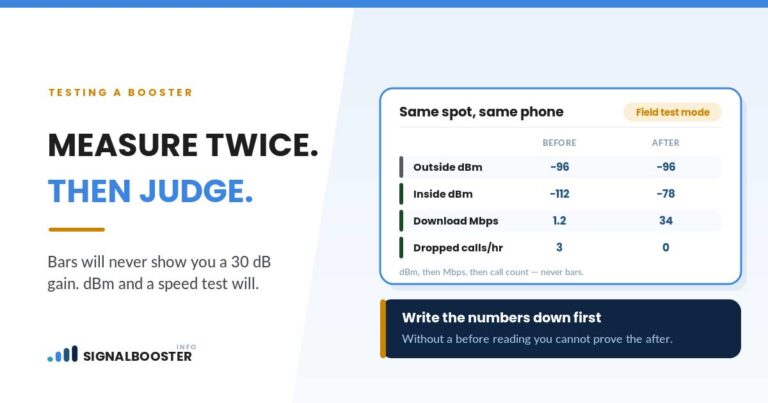
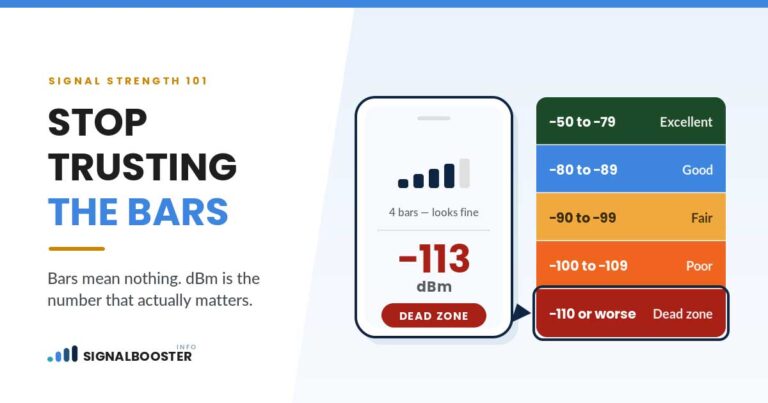
- Take a real dBm reading inside the attic, as high as you can safely stand near the roofline or a gable vent, using the method in how to check your dBm signal strength.
- Take a second reading from the highest safely accessible point outside the roof itself: a second-story window, a balcony, or simply standing at ground level near the exterior wall closest to where a roof antenna would go.
- Compare the two. If the attic reading is close to the exterior reading, your roof is not costing you much and an attic mount is a reasonable choice. If the attic reading is noticeably weaker, especially if your roof has metal content or you know there’s foil-backed insulation up there, that gap is your roof telling you it needs to be cleared, not worked around.
- Factor in margin, not just the raw number. A borderline outdoor reading with several dB lost to an attic mount can drop you into a range where a booster struggles to help; a strong outdoor reading has more room to absorb that loss and still work fine from the attic. What counts as a good dBm reading, covered in the same guide above, explains what “borderline” actually means for your setup.
A Decision Framework Nobody Selling Antennas Gives You
Most product pages simply recommend “roof if possible” without saying when attic is genuinely fine. Here is a more honest breakdown.
| Your situation | Reasonable choice |
|---|---|
| Asphalt shingle roof, no foil insulation, attic reading close to exterior reading | Attic mount is reasonable |
| Asphalt shingle roof, but attic reading is noticeably weaker than exterior | Roof mount is worth the extra work |
| Foil-backed or radiant-barrier insulation in the attic | Roof mount, or relocate the antenna away from the foil if attic is the only option |
| Metal roof or metal roof deck | Roof mount; attic mounting under metal roofing rarely works well |
| Directional antenna that needs precise aim at a distant tower | Roof mount; obstructions and reflections inside an attic make fine aiming harder |
| Borderline outdoor signal to begin with | Roof mount, since there is little margin to spend on attic loss |
An attic-versus-roof decision also changes how much room you have for a second, separate concern: keeping the outdoor antenna properly isolated from the indoor antenna to avoid oscillation. Whichever location you choose, treat it as one half of that planning problem, covered fully in antenna separation distance: what actually prevents feedback.
The Real Physical Risk Here Isn’t the Signal, It’s the Roof
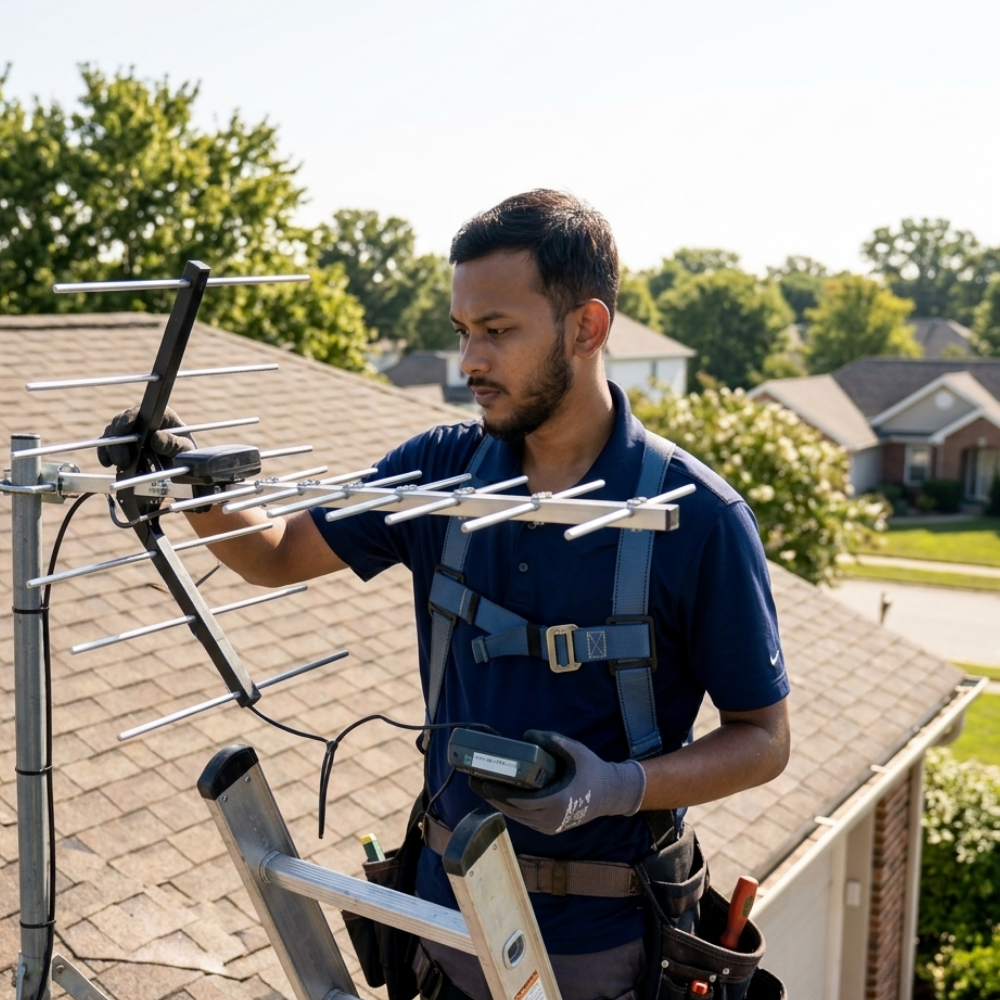
This is the part worth being plain about. The signal difference between attic and roof mounting is a real engineering trade-off. Getting yourself onto a roof to drill, mount hardware, and route cable is a real physical risk, and it is not one this article is going to talk you through. Falls from residential roofs are a genuine and common cause of serious injury, the risk goes up with pitch, weather, and inexperience, and a mistake made while improperly anchoring or flashing a roof penetration can also cause a water leak that costs far more to fix than the antenna install saved. If your evidence points to a roof mount, that is a job for a professional installer or roofer, not a weekend project with a ladder. Whether a DIY signal booster install makes sense at all versus bringing in a professional is worth reading before you decide how much of this job to take on yourself.
What a Professional Roof Install Actually Involves
A licensed installer or roofer handles the parts of a roof mount that carry real risk and real consequences if done wrong: proper fall protection while working at height, correctly flashing and sealing the roof penetration so it does not leak, choosing a structurally sound anchor point rather than just the nearest rafter, and, in some areas, checking whether local permitting or HOA rules apply to exterior antenna installations. None of that is a reason to avoid a roof mount when your test results call for one; it is a reason to pay someone qualified to do that specific part of the job.
FAQ
Does an attic-mounted antenna work as well as a roof-mounted one?
Not quite. Roofing material between the antenna and the sky always costs some signal. How much depends heavily on what the roof is made of; asphalt shingles cost relatively little, while metal roofing or foil-backed insulation can cost a lot.
How much signal does attic mounting actually lose?
There is no single number that applies to every roof, since it depends on the roofing material, insulation, and even weather. Test both locations with a real dBm reading rather than assuming a fixed loss figure, and treat any specific number you see online as illustrative rather than a fact about your own roof.
Can I mount in the attic if I have a metal roof?
It is generally a poor choice. Metal roofing blocks significantly more signal than shingles and sheathing, and an attic antenna under a metal roof is working against a much bigger obstacle than a shingle roof would present.
Is it safe to mount an antenna on my roof myself?
Roof work carries real fall risk and, if the penetration is not sealed correctly, real risk of a water leak. If your testing points to a roof mount, hiring a professional installer or roofer for that part of the job is the safer and often cheaper choice once you account for the cost of getting it wrong.
How do I decide between attic and roof for my specific house?
Take a real dBm reading inside the attic near the roofline, and a second reading from the highest safely accessible spot outside the roof itself. If the two are close and your roof has no metal or foil insulation, attic mounting is reasonable. If there is a meaningful gap, or you have a metal roof, plan for a roof mount and bring in a professional for the installation.